2026-10-13 ·
Cost Factors for Mold Removal in Houston After Storms
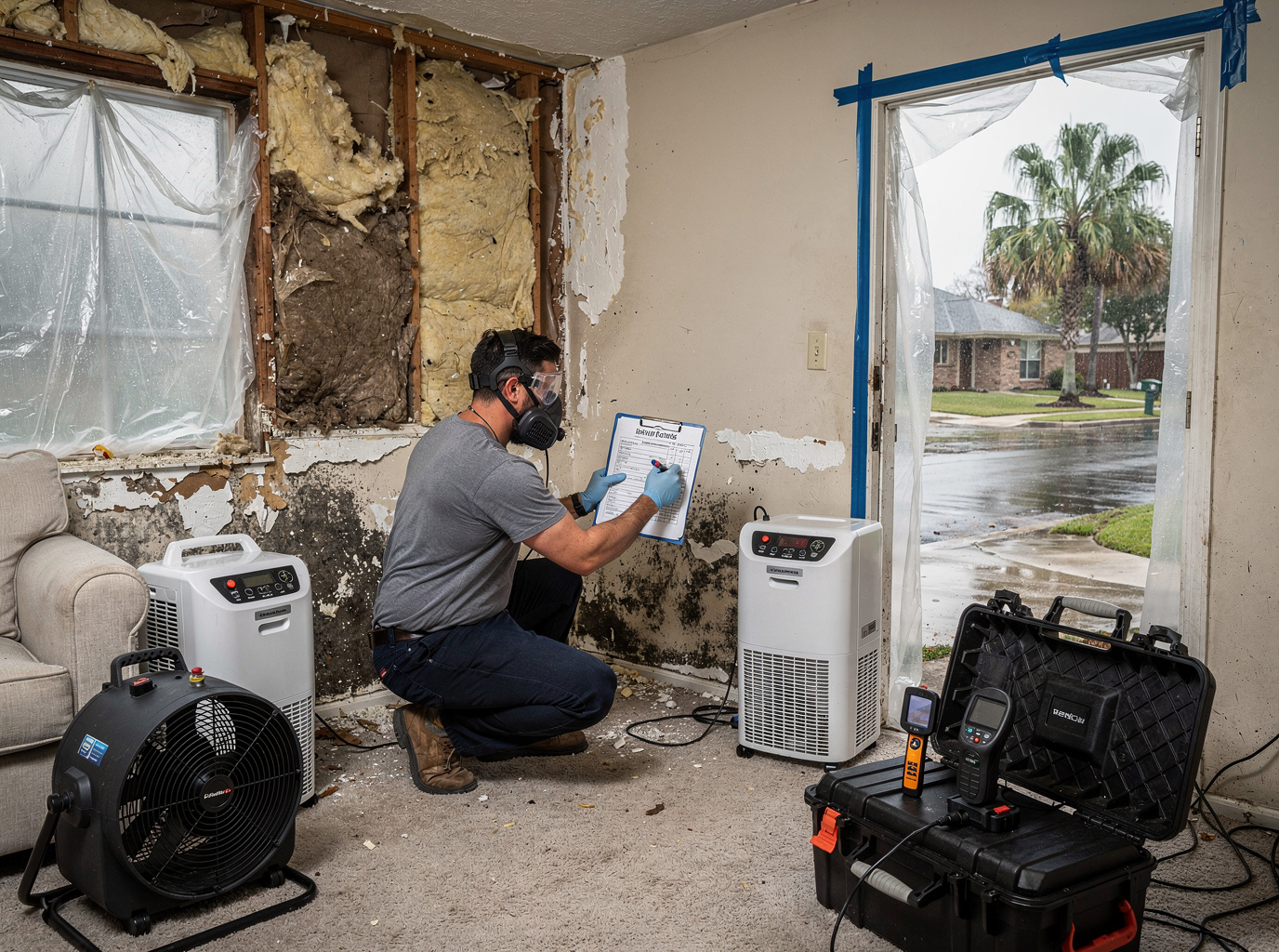
After storms hit Houston, mold removal costs typically range from $800 to $6,500 for residential properties depending on square footage affected and access challenges in crawl spaces or attics. Harris County's subtropical climate with hot humid summers accelerates spore growth once floodwater recedes, especially in single-story ranch homes built before 1980 that dominate the Heights and Midtown. Factors such as hidden moisture behind drywall in River Oaks estates or Downtown high-rises add layers to every project.
Extent of Damage After Flooding
Storm surge and heavy rainfall often push water into basements and crawl spaces throughout Katy and Sugar Land, where clay-heavy soils slow drainage. Larger affected areas drive up labor because crews must remove and dispose of saturated insulation and baseboards before drying begins. In Pearland neighborhoods with newer slab foundations, water can still wick up through expansion joints and create pockets of growth under flooring. Homeowners who delay action see costs climb when mold migrates into HVAC systems, requiring separate containment protocols. Smaller jobs confined to one bathroom might stay under $1,200, while whole-home remediation after Hurricane-level rain can exceed $5,000 once multiple rooms require negative-air machines and HEPA filtration.
Role of Inspection and Testing
Professional mold inspection and testing usually adds $300 to $800 before any removal starts, yet it prevents over-scoping or missed colonies in attics common in Heights bungalows. Air sampling and surface swabs reveal whether black mold or other species require specialized containment. Many properties near Buffalo Bayou experience repeated flooding, so testing helps map moisture history that visual checks miss. Skipping this step often leads to callbacks when spores remain in wall cavities. The process also documents conditions for insurance adjusters working claims in Harris County.
Climate and Seasonal Timing Effects
Houston's mild winters allow mold to remain active year-round, unlike colder regions, so post-storm jobs booked in October still face 80-plus percent humidity that slows drying. Mold growth after Houston flooding near Buffalo Bayou shows how repeated saturation in older plaster walls raises material replacement costs. Summer projects require extra dehumidification equipment to reach 50 percent indoor humidity targets before new drywall goes up. Homes in Midtown and Montrose with poor ventilation see faster regrowth if exhaust fans are not upgraded during repairs.
Remediation Methods and Follow-Up
Containment barriers, antimicrobial application, and HEPA vacuuming form the core of post-flood mold cleanup and directly affect pricing. Porous materials like carpet padding are discarded, while hard surfaces receive multiple cleanings. Checking attics for mold in Houston's summer humidity reveals how insulation removal in older Heights homes adds $1,500 to $3,000 compared with newer construction. Final clearance testing verifies spore counts have dropped, giving owners confidence before reoccupying spaces. Scheduling around business hours at 6726 Theall Rd suite c allows crews to complete drying phases without weekend delays.