2026-10-13 ·
Checking Attics for Mold in Houston's Summer Humidity
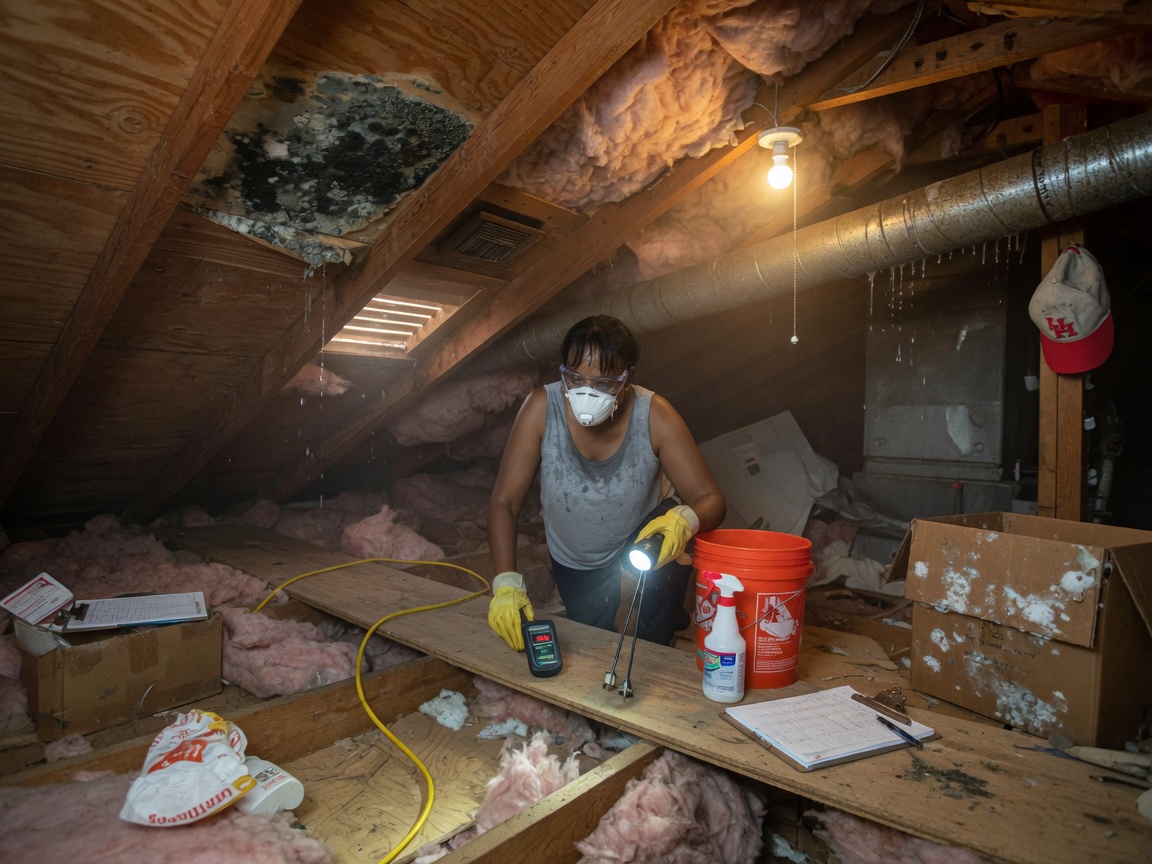
Houston's summer humidity demands attic inspections every 3-4 months in homes across the Heights, Montrose, and River Oaks. Start by noting musty odors or dark spots on rafters when temperatures climb above 85°F with high dew points, as these conditions trap moisture under standard asphalt shingles common in 1960s-1980s builds throughout Harris County.
Houston Humidity Patterns and Attic Moisture
Subtropical summers bring daily humidity levels that rarely drop below 70 percent, allowing condensation to form on cooler attic surfaces even without roof leaks. Homes in Midtown and Downtown often feature older ventilation systems that struggle against this constant moisture load, unlike newer builds in Sugar Land or Pearland. Mild winters provide little drying relief, so unchecked summer moisture lingers into fall and promotes hidden growth along insulation edges. Terrain in these flat areas slows natural drainage after heavy rains, pushing more vapor upward through ceiling penetrations. Checking soffit and ridge vents for blockages becomes essential because clogged airflow turns attics into moisture traps during peak July and August conditions.
Visible and Hidden Signs During Summer Checks
Look for gray or black discoloration on wood sheathing near the peak, especially where insulation has settled in older Heights properties. Musty smells intensify when attic temperatures exceed outdoor readings by 20 degrees, a common occurrence in Montrose bungalows with limited ridge venting. Water stains on rafters signal past condensation that summer humidity reactivates, while white powdery residue on ducts points to active growth. In River Oaks estates, check around recessed lights and bathroom exhaust fans that vent into the attic, as these create warm, moist pockets. Soft or crumbling drywall corners near the access hatch often indicate hidden colonies spreading from roof deck moisture.
Step-by-Step Attic Inspection Process
Enter the attic during cooler morning hours to avoid heat stress, wearing a respirator and using a strong flashlight to scan all surfaces. Measure relative humidity with a basic meter—if readings stay above 60 percent, improve ventilation before mold establishes. Examine insulation for dark patches and probe suspect wood with a screwdriver to test softness. Trace any pipes or wiring for condensation trails, noting locations near the Houston Zoo or Museum of Fine Arts areas where older homes share similar construction. Photograph findings and note vent conditions before exiting. Repeat checks after any heavy rainfall to catch new moisture entry points.
When Professional Evaluation Makes Sense
Persistent odors or widespread discoloration after basic ventilation fixes warrant a full assessment through Mold Inspection and Testing. Homes near Minute Maid Park or Space Center Houston often share similar rooflines that trap humidity, making targeted Attic Mold Removal more efficient than DIY attempts. Post-storm conditions in nearby Katy or Sugar Land can accelerate growth, as detailed in Mold Growth After Houston Flooding Near Buffalo Bayou. Owner-operated teams familiar with Harris County housing stock provide realistic timelines without overpromising results.
Ventilation Upgrades That Address Summer Conditions
Adding powered attic fans sized for 1,500-2,000 square foot spaces helps move humid air outward when passive vents fall short in Midtown row houses. Seal gaps around plumbing stacks with foam before installing new insulation rated R-38 or higher to reduce thermal bridging. In Pearland and Stafford subdivisions, homeowners report better results after combining ridge vent extensions with solar-powered exhaust units that run during peak humidity hours. These adjustments lower moisture accumulation without altering the original roof structure common across the region.