2026-10-13 ·
Mold Growth After Houston Flooding Near Buffalo Bayou
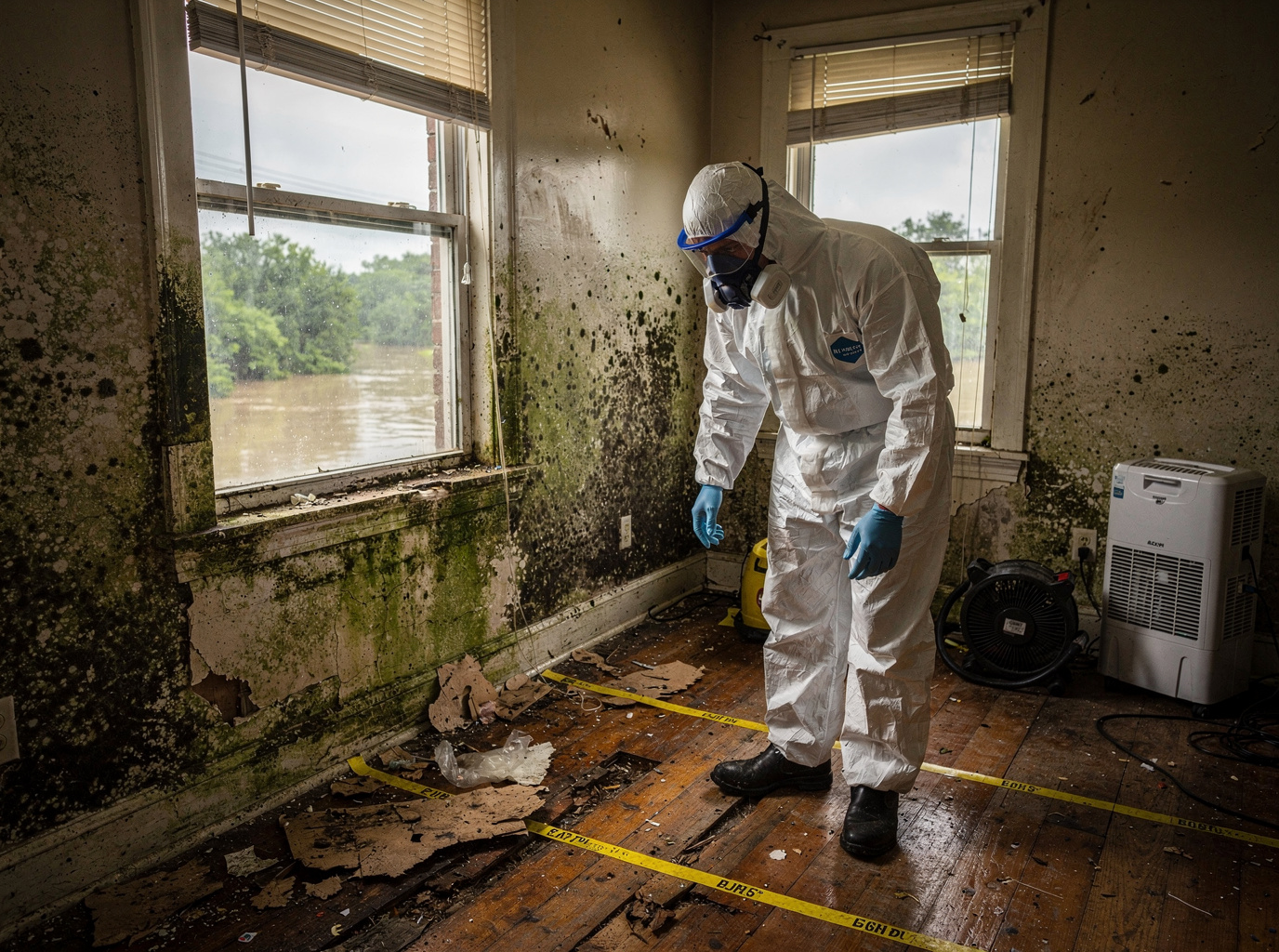
After flooding near Buffalo Bayou, mold colonies can begin forming within 24-48 hours on wet drywall, insulation, and wood framing in homes throughout Montrose, Midtown, and the Heights. Houston's subtropical climate keeps relative humidity high even after waters recede, so porous materials stay damp longer than in drier regions. Older housing stock common in these neighborhoods often features crawl spaces and attics that trap moisture from bayou overflow, speeding hidden growth. River Oaks properties with finished basements face similar risks when floodwater backs up through drains.
How Buffalo Bayou Flooding Reaches Local Homes
Buffalo Bayou runs through central Houston and overflows during heavy rains, sending water into low-lying blocks of Montrose and Midtown. Harris County terrain slopes gently toward the bayou, so water pools against foundations for days. Homes built before modern drainage upgrades in the Heights frequently have pier-and-beam construction that allows moisture to wick into floor joists. Nearby cities such as Katy and Sugar Land see less direct bayou impact but still receive runoff that raises local water tables and affects slab homes.
Once water enters wall cavities or subfloors, the combination of heat and lingering humidity in Houston creates ideal conditions for mold within two days. Residents near Minute Maid Park or the Museum of Fine Arts have reported visible growth on baseboards within 72 hours after past events. The mild winters do little to slow the process because indoor temperatures stay warm enough for spores to multiply year-round.
Timeline of Mold Development in Houston's Climate
Day one after floodwaters drop, surfaces begin to dry on the outside while interiors remain saturated. By day three, black mold often appears on drywall in bathrooms and closets of Midtown apartments. In the Heights, older plaster walls hold moisture longer, allowing growth behind cabinets and in attics. Homeowners who open windows for ventilation during humid summer months can inadvertently raise indoor moisture levels and prolong the cycle.
Pearland and Sugar Land properties experience slower drying because of heavier clay soils that hold water against foundations. Professional drying equipment is usually required beyond simple fans once saturation exceeds 48 hours. The Post-Flood Mold Cleanup process typically begins with moisture mapping to locate pockets that standard dehumidifiers miss.
Hidden Growth Areas Common After Bayou Floods
Crawl spaces under Heights bungalows trap humidity and organic debris washed in by floodwater, creating long-term mold reservoirs. Attics in Montrose homes with roof leaks from storm winds often show growth on rafters weeks later when condensation forms. Drywall behind kitchen cabinets and in laundry rooms absorbs water through base plates and stays wet for extended periods. Air ducts that pull air from affected rooms can spread spores to every level of the house.
The Mold Inspection and Testing step identifies these locations before visible signs appear on ceilings or walls. Checking attics for mold in Houston's summer humidity becomes especially important after any bayou event because trapped heat accelerates spore germination.
Practical Steps for Homeowners in Affected Neighborhoods
Remove standing water and wet materials within the first 24 hours when possible. Use a moisture meter on drywall and subfloors to confirm readings stay below 15 percent before closing walls. Increase ventilation with exhaust fans while running dehumidifiers set to 50 percent or lower. Homeowners in River Oaks and Downtown high-rises should also inspect shared HVAC systems because spores travel easily through return ducts.