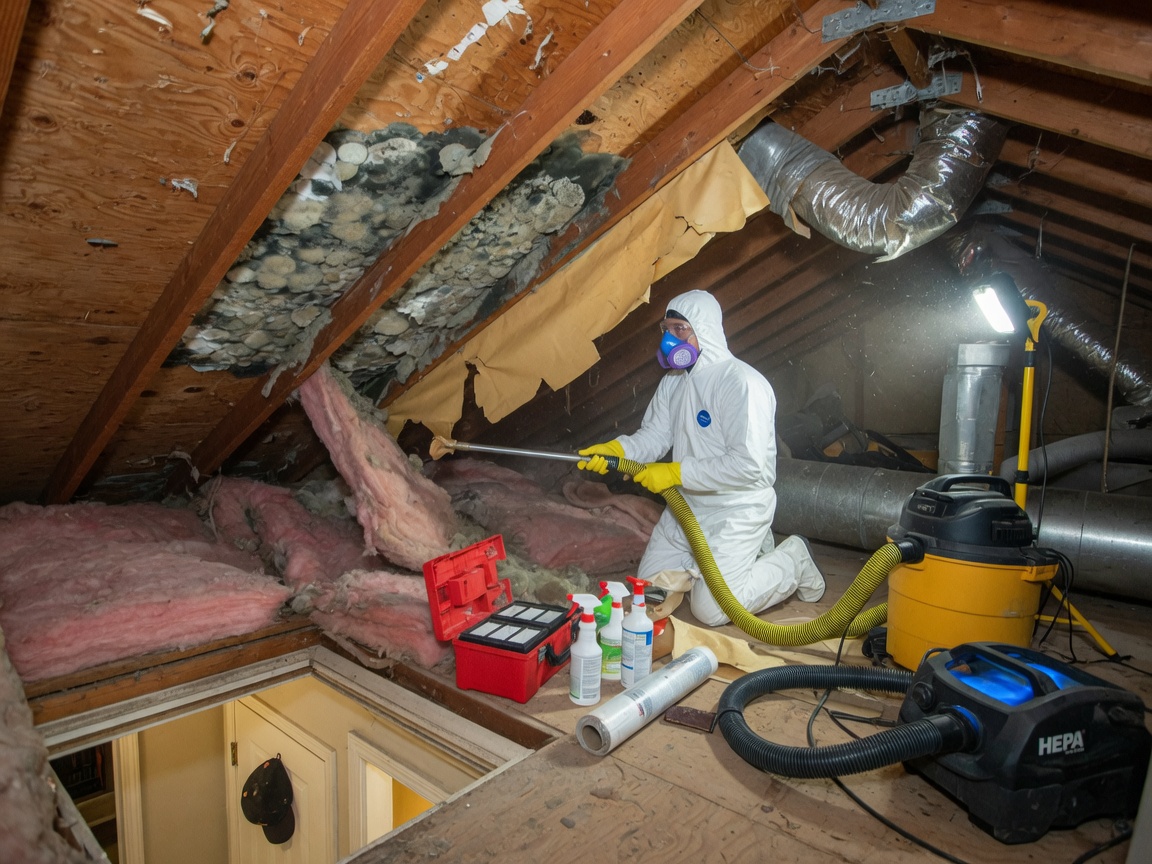
Houston attics in neighborhoods like the Heights and Montrose often hold mold because mild winters and hot humid summers keep moisture trapped under older roof decks and insulation. Homes built before the 1990s frequently have single-layer vents and kraft-faced batts that trap condensation once summer dew points stay above 70 degrees for weeks. Technicians must pull back insulation carefully to avoid disturbing settled spores that can drop into living spaces below.
River Oaks and Midtown properties add another layer with their mix of tile roofs and limited ridge venting, which slows airflow during the long humid season. When leaks from flashing or HVAC lines reach the attic, mold spreads along rafters faster than in drier climates. Containment becomes critical because open floor plans allow spores to migrate through ceiling returns into finished rooms.
Work in Downtown and nearby Katy homes requires checking for hidden growth behind knee walls and around recessed lights, where poor sealing lets humid air from the crawl space rise. Removing affected sheathing or batts often reveals soft spots in decking that must be addressed before new insulation goes in. Final clearance testing focuses on spore counts because Harris County humidity can restart colonies within days if moisture sources remain.
Technician insight
In Houston the thing that catches most people out with Attic Mold Removal is how the subtropical humidity keeps rafters damp even after a small roof leak stops, especially in pre-1980 Heights homes where the original single-layer vents never move enough air once summer temperatures stay above 90.
Heights Bungalow Attic
A 1960s bungalow in the Heights showed black spotting on rafters after a summer of high dew points. Inspection found condensation under the old insulation along the north slope where ridge vents were blocked by debris. Crew removed the saturated batts, treated the decking, improved soffit airflow, and cleared the space after sampling confirmed spore counts had dropped.
Attic Mold Removal Services We Offer
✓Attic Insulation Removal
Pulling contaminated batts and blown cellulose from Houston attics to stop ongoing spore release in humid conditions.
✓Rafter and Sheathing Treatment
Cleaning and sealing mold on exposed rafters and roof decking common in Heights and Montrose homes with older ventilation.
✓Attic Ventilation Assessment
Evaluating and improving ridge and soffit vents to reduce moisture buildup during Houston's extended humid summers.
✓HVAC Line Set Containment
Sealing attic ductwork and line sets that carry condensation into living spaces below in Midtown and River Oaks properties.
✓Post-Remediation Clearance Testing
Air sampling after removal to confirm spore levels meet safe thresholds before reinstalling insulation.
Attic Mold Removal Cost in Houston, TX
| Service | Typical Range | What Affects It |
|---|---|---|
| Small attic inspection and limited removal | $600–$1,200 | Single-story Heights or Montrose homes with visible growth only |
| Full attic insulation removal and treatment | $1,800–$3,500 | Larger attics in older homes with multiple moisture points |
| Clearance air sampling | $250–$450 | Required after any removal job |
Ranges are typical for Houston, TX and confirmed with an exact written quote before any work starts.
How it works
- 1
Initial Inspection
Technicians enter the attic from the access point, map visible growth, and check insulation type and moisture sources.
- 2
Containment Setup
Plastic sheeting and negative air machines isolate the attic to keep spores from entering living areas during work.
- 3
Material Removal
Contaminated insulation and affected wood sections are bagged and removed while surfaces receive antimicrobial treatment.
- 4
Drying And Verification
Dehumidifiers run until moisture readings drop, followed by clearance air sampling before any new materials are installed.
Pricing
Pricing varies by attic size, insulation depth, and extent of hidden growth behind knee walls or around HVAC lines.