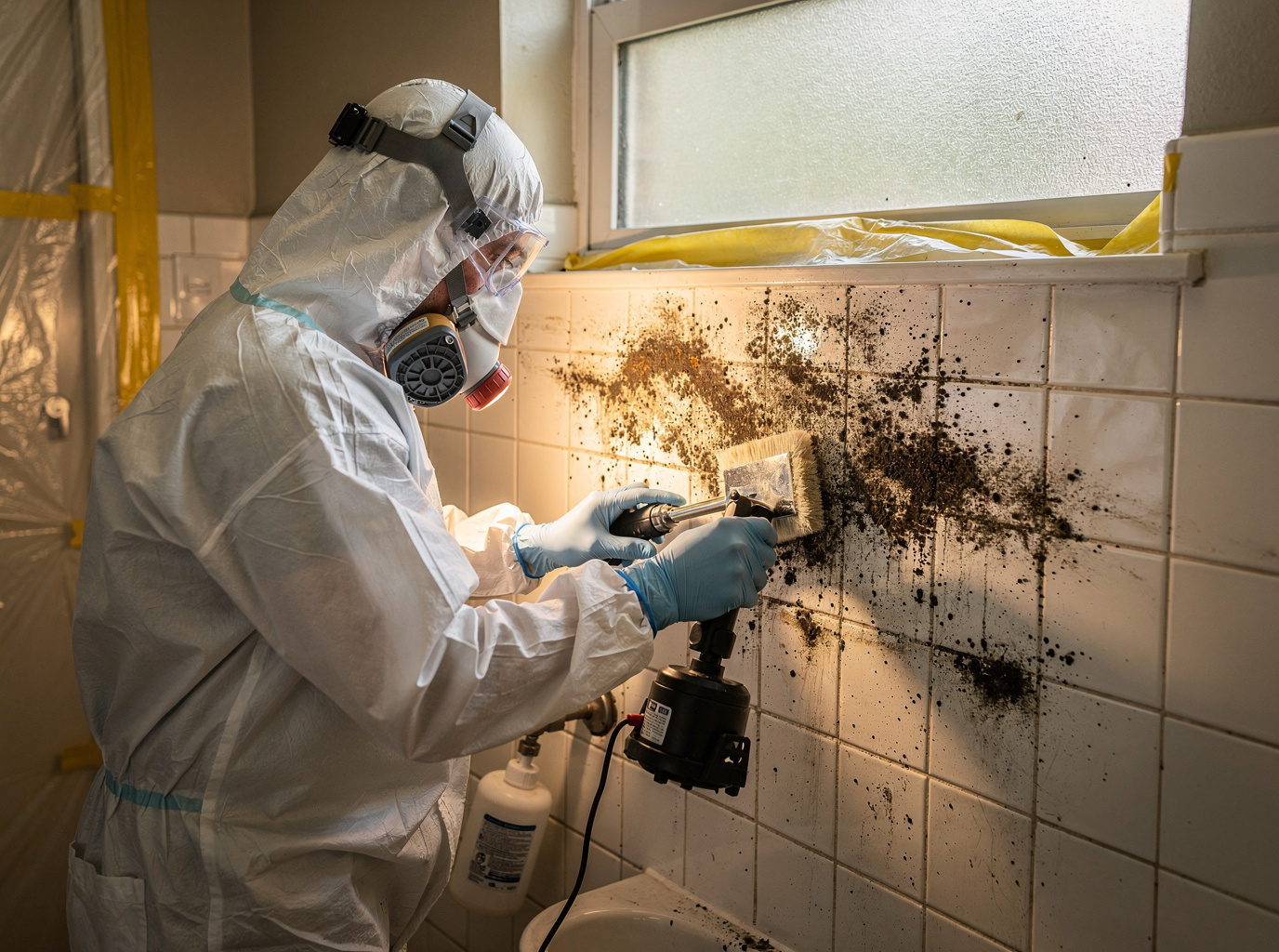
Houston bathrooms in older Heights and Midtown homes often feature original drywall and tile set over moisture-prone wood framing. Subtropical humidity keeps indoor moisture high year-round, and air-conditioning condensate lines frequently leak behind vanities or into ceiling cavities. When mold appears on grout or along tub surrounds, the growth usually extends into the paper facing of drywall or the back of cabinets. Removing only surface stains leaves roots that return within weeks once humidity spikes again.
Containment is critical in compact layouts common to River Oaks and Montrose properties. Plastic barriers and negative air machines prevent spores from moving into adjacent bedrooms or hallways. After cutting out affected drywall, crews use moisture meters to verify that studs and subfloors have dried below 15 percent before new materials are installed. Exhaust fan upgrades or new vent ducts to the exterior are often required because many 1960s–1980s homes still vent into attics, feeding more moisture back into living spaces.
Homeowners in Katy and Sugar Land frequently discover black growth on ceiling drywall after roof leaks or overflowing tubs. In these cases the insulation above must be removed and the joists treated, because trapped moisture in fiberglass holds humidity against the new drywall. We always test for hidden mold behind baseboards and inside vanity toe-kicks before declaring an area clear.
Technician insight
In Houston the thing that catches most people out with Bathroom Mold Removal is the way 1970s–80s drywall in Heights and Montrose homes wicks moisture from the slab up into the vanity toe-kick; once you open the cabinet you find the mold has traveled three feet up the wall behind the baseboard because the original builders never taped the bottom edge.
Midtown bathroom after AC leak
A homeowner in Midtown noticed black spots along the tub after their AC condensate line clogged during a humid July stretch. Inspection showed the mold had traveled behind the drywall into the corner stud. We removed the lower three feet of wall, dried the framing for 48 hours, treated the joists, and reinstalled moisture-resistant drywall before the weekend.
Bathroom Mold Removal Services We Offer
✓Shower Stall Mold Removal
Removes mold from tile, grout, and fiberglass in Houston showers while sealing porous surfaces against recurring subtropical humidity.
✓Vanity Cabinet Mold Remediation
Extracts mold from particleboard and wood vanities common in Heights and Midtown homes, replacing saturated bases and improving airflow underneath.
✓Bathroom Ceiling Mold Treatment
Addresses ceiling drywall and insulation mold caused by exhaust fan failures or roof leaks in older Montrose and Downtown properties.
✓Tile Grout Mold Cleaning
Deep cleans and seals grout lines throughout bathrooms where constant moisture from Houston summers allows black mold to embed.
✓Exhaust Fan Mold Removal
Cleans and replaces bathroom exhaust fans that have become mold reservoirs, venting them properly to the exterior instead of attics.
Bathroom Mold Removal Cost in Houston, TX
| Service | Typical Range | What Affects It |
|---|---|---|
| Small bathroom surface treatment | $350–$650 | Visible grout and tile only, no demolition |
| Standard vanity and drywall removal | $800–$1,400 | Includes one wall section and cabinet base |
| Ceiling and insulation job | $1,200–$2,100 | Higher in two-story Heights homes with attic access |
| Full shower stall rebuild | $1,800–$3,200 | Tile, backer board, and waterproofing membrane |
Ranges are typical for Houston, TX and confirmed with an exact written quote before any work starts.
How it works
- 1
On-Site Inspection
Technician checks all porous surfaces with moisture meters and borescopes, documenting extent in areas like the Heights or Montrose.
- 2
Containment Setup
Plastic sheeting and negative air establish barriers so spores stay out of living spaces during removal.
- 3
Material Removal
Affected drywall, insulation, and cabinetry are cut out and bagged for disposal following local Harris County guidelines.
- 4
Drying and Treatment
Air movers and dehumidifiers bring moisture levels down before antimicrobial application and final clearance testing.
Pricing
Pricing varies with square footage, hidden damage behind cabinets, and whether drywall or insulation replacement is needed.