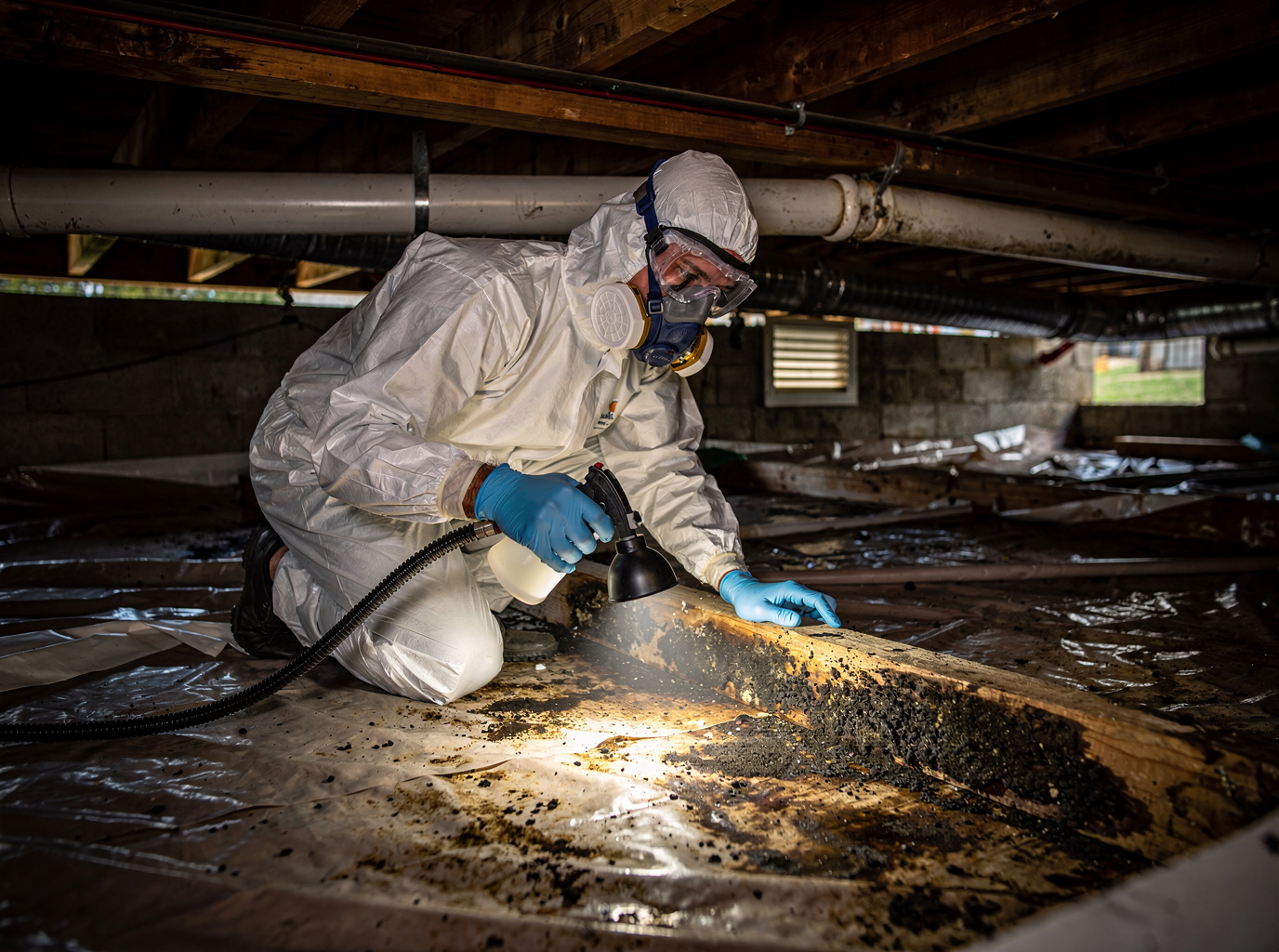
Houston's subtropical climate brings extended periods of high humidity that drive moisture into crawl spaces beneath older homes in the Heights and Montrose. Wooden joists and subflooring in these early-to-mid 20th century houses absorb condensation, especially when mild winters fail to dry out the soil beneath. Technicians often find mold colonies hidden behind fiberglass batts or on pier-and-beam supports where airflow is restricted by surrounding structures in dense blocks.
Removal work here starts with isolating the space to prevent spores from migrating into living areas above. Crews remove affected insulation and apply EPA-registered antimicrobials to joists while managing standing water that collects after heavy rains common near Downtown and Midtown. In River Oaks and nearby sections of Harris County, clay-heavy soils slow drainage, so crews frequently install or repair French drains before sealing the ground with heavy-duty liners to cut future moisture entry.
Homeowners in Katy, Sugar Land, and Pearland face similar issues when slab-adjacent crawl spaces connect to older additions. Edge cases include mold growth on HVAC ducts routed through the space or on forgotten cardboard stored under the house. Proper containment and negative air machines are essential because open crawl spaces can push particles into finished rooms during removal.
Technician insight
In Houston, the thing that catches most people out with Crawl Space Mold Removal is skipping the vapor barrier after cleaning older Heights or Montrose homes. Our subtropical summers keep pumping humidity up from the clay soil, so mold returns within months unless the ground is sealed and any French drains around the foundation are working.
Heights Bungalow After Summer Storms
Heavy rains left standing water under a 1920s pier-and-beam home near 19th Street. Inspection found mold on joists and saturated insulation. Crews contained the space, removed the insulation, treated the wood, installed a sealed vapor barrier, and verified clearance before the homeowner could safely store belongings again.
Crawl Space Mold Removal Services We Offer
✓Crawl Space Inspection and Moisture Mapping
Detailed assessment of joists, piers, and soil conditions to locate hidden colonies before any removal begins.
✓Containment and Negative Air Setup
Sealing off the crawl space from the home interior with plastic barriers and HEPA filtration to keep spores contained during work.
✓Insulation Removal and Disposal
Safe extraction of contaminated fiberglass or cellulose followed by proper bagging and transport to approved disposal sites.
✓Antimicrobial Treatment of Structural Wood
Application of targeted treatments to joists and beams after visible mold is removed to address residual growth.
✓Vapor Barrier Installation
Placement of heavy 12-mil liners sealed at walls and piers to reduce ground moisture in Houston's humid conditions.
✓Post Remediation Clearance Testing
Independent air and surface sampling to confirm mold levels meet acceptable standards before the space is returned to use.
Crawl Space Mold Removal Cost in Houston, TX
| Service | Typical Range | What Affects It |
|---|---|---|
| Initial Crawl Space Inspection | $175–$350 | Includes moisture readings and photo documentation; larger or more obstructed spaces cost more. |
| Basic Mold Removal Under 500 Sq Ft | $1,200–$2,400 | Covers removal, treatment, and disposal; price rises with insulation volume or difficult access. |
| Vapor Barrier Installation | $800–$1,800 | 12-mil liner sealed at piers and walls; cost varies by square footage and existing drainage needs. |
| Clearance Testing | $250–$450 | Independent lab sampling for air and surfaces after work is complete. |
Ranges are typical for Houston, TX and confirmed with an exact written quote before any work starts.
How it works
- 1
Initial Assessment
Technician enters the crawl space to map moisture sources, document affected materials, and check for hidden growth behind insulation.
- 2
Containment
Plastic sheeting and negative air machines isolate the work area from the rest of the Houston home.
- 3
Removal And Treatment
Contaminated insulation and debris are removed, wood is cleaned and treated, and standing water is extracted.
- 4
Prevention Measures
Vapor barrier is installed or repaired and any drainage issues near the foundation are addressed.
- 5
Verification
Clearance testing confirms the space meets post-remediation standards before final walkthrough.
Pricing
Pricing depends on crawl space size, extent of hidden growth, and whether vapor barrier or drainage work is required.