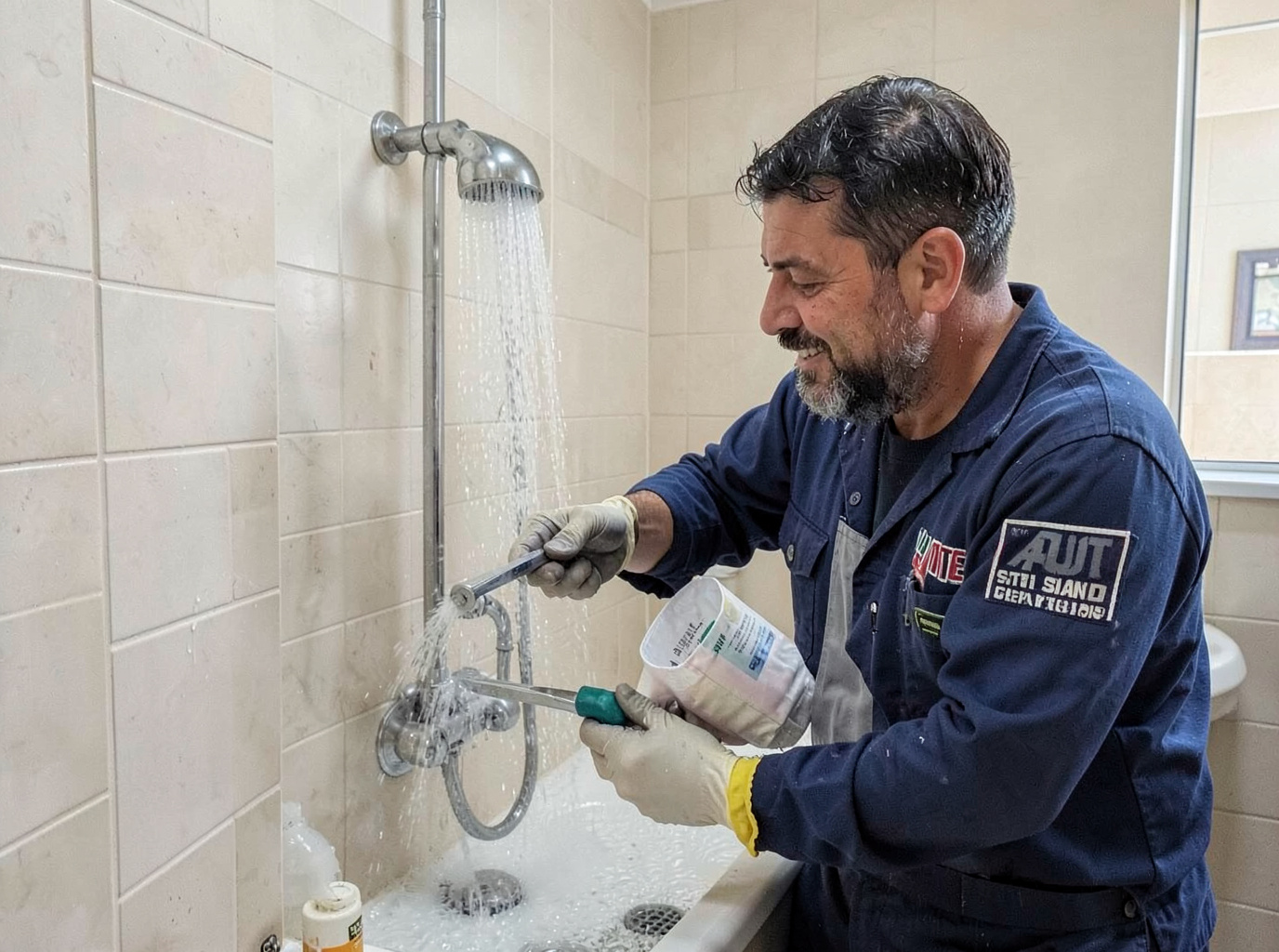
Houston's subtropical climate brings high humidity year-round that keeps bathroom moisture trapped in showers long after use. In neighborhoods like the Heights and Montrose, many homes built before 1980 have original tile and grout that absorb water and support black mold colonies behind the surface. Standard household cleaners fail once roots reach the subfloor or wallboard, requiring removal of affected materials rather than surface treatment.
Shower pan leaks and poor ventilation in Midtown and Downtown condos create hidden pockets along the curb and around the drain. Technicians must pull baseboards and check for soft drywall before any cleaning begins. Harris County homes near the bayous also see seasonal flooding that raises indoor humidity and restarts growth weeks after initial cleaning if drying is incomplete.
Removal work follows containment protocols to keep spores from spreading into living spaces. HEPA air scrubbers run during demolition of grout lines and caulk, followed by antimicrobial treatment on remaining surfaces. Final steps include new mildew-resistant caulk and exhaust fan verification so homes in River Oaks and Sugar Land stay dry through the next humid summer.
Nearby cities like Katy and Pearland share the same clay-heavy soil that shifts foundations and cracks shower pans over time. This movement opens new entry points for water that homeowners often miss until visible mold appears on the ceiling below.
Technician insight
In Houston the thing that catches most people out with Shower Mold Removal is how quickly humidity from the subtropical summers re-wets tile in older Heights and Montrose homes once the pan starts shifting on clay soil.
Heights Bungalow Shower
Homeowner noticed black lines along the tub curb after a wet spring. Inspection found soft drywall behind the tile and a cracked pan leaking into the floor joists. Crew contained the space, removed the lower three feet of wall, treated the framing, and reinstalled with new moisture-resistant board and caulk. Exhaust fan was upgraded to keep humidity down through summer.
Shower Mold Removal Services We Offer
✓Tile Grout Mold Extraction
Remove mold embedded in grout lines of Houston showers without replacing entire tile walls.
✓Shower Pan Leak Inspection
Check for hidden leaks under pans in older Heights and Montrose homes before mold spreads to subfloors.
✓Silicone and Caulk Replacement
Strip and replace moldy caulk with mildew-resistant products suited to Houston humidity.
✓Drywall and Baseboard Removal
Cut out water-damaged drywall behind showers in Midtown and Downtown properties.
✓Ventilation Assessment
Test and improve exhaust fans to reduce moisture in River Oaks and Katy bathrooms.
✓Post-Remediation Clearance Testing
Air sampling after work to confirm mold levels are safe in Harris County homes.
Shower Mold Removal Cost in Houston, TX
| Service | Typical Range | What Affects It |
|---|---|---|
| Small shower surface cleaning | $250–$450 | Limited to grout lines with no drywall damage |
| Full shower remediation | $600–$1,200 | Includes pan inspection and baseboard removal |
| Shower plus adjacent wall repair | $900–$1,800 | Drywall replacement in homes with hidden leaks |
| Clearance air testing | $150–$300 | Optional third-party sampling after work |
Ranges are typical for Houston, TX and confirmed with an exact written quote before any work starts.
How it works
- 1
On-Site Inspection
Technician checks tile, grout, pan, and surrounding walls for moisture and visible growth.
- 2
Containment Setup
Plastic barriers and negative air machines isolate the shower from the rest of the home.
- 3
Material Removal
Affected grout, caulk, and damaged drywall are removed and bagged for disposal.
- 4
Cleaning And Treatment
HEPA vacuuming and antimicrobial application on remaining surfaces.
- 5
Drying And Sealing
Dehumidification followed by new caulk and verification of exhaust fan function.
Pricing
Most shower mold jobs in Houston fall between a few hundred and low thousands depending on extent and access.