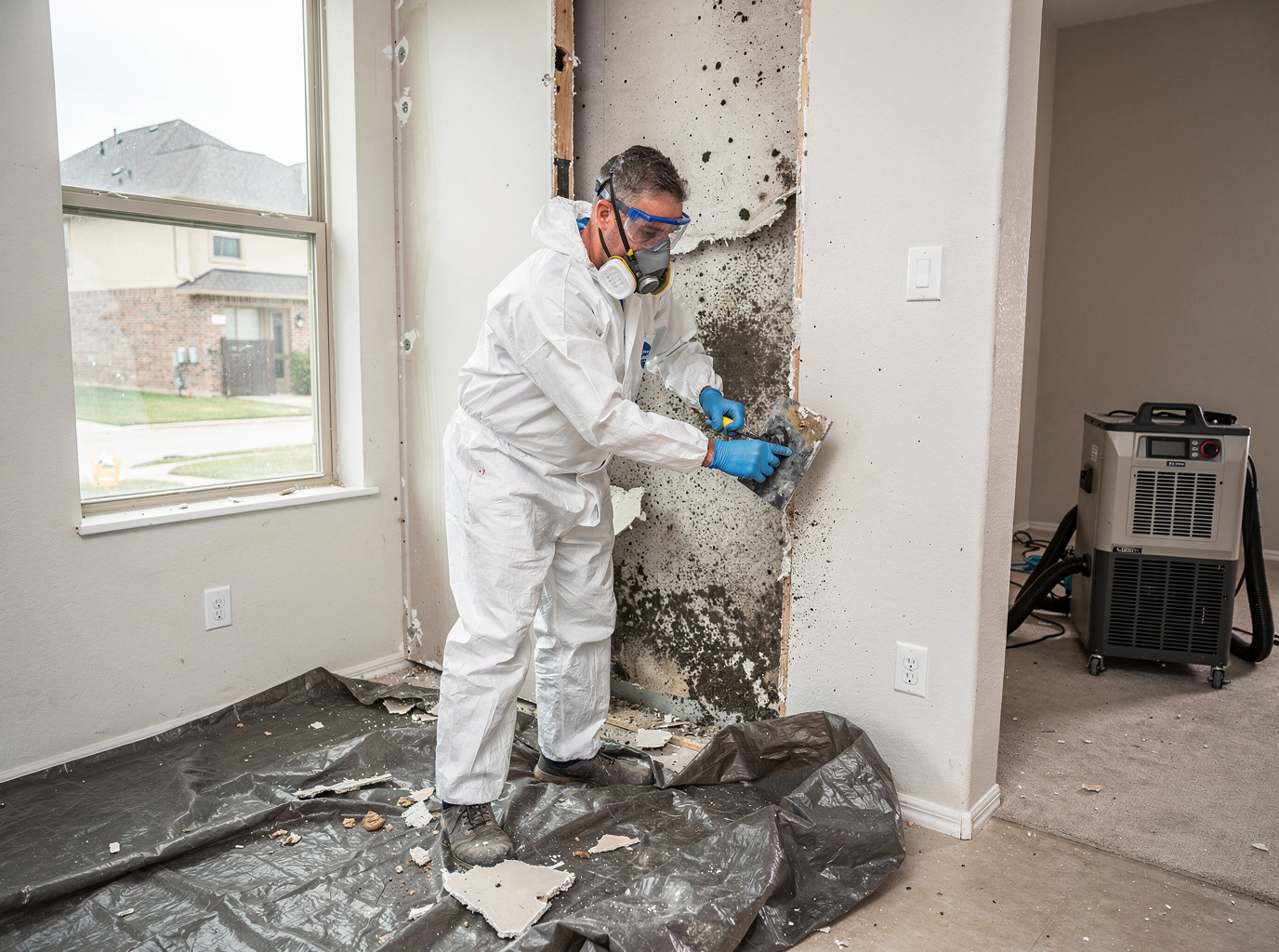
Houston's subtropical climate drives repeated moisture intrusion into drywall through condensation on cooler interior walls during hot summers and occasional winter fronts. In neighborhoods like the Heights and Montrose, many 1920s–1960s homes use gypsum board over older plaster or lath that readily absorbs water from roof leaks or AC condensate lines. Technicians must cut at least 18 inches beyond visible growth to reach the paper facing where mold colonies hide, then treat the cavity with HEPA vacuuming and antimicrobial rinses before installing new moisture-resistant board.
Slab-on-grade construction common across Midtown and Downtown leaves little airflow beneath walls, so hidden growth often travels upward from minor plumbing leaks near the base plate. River Oaks and nearby estates frequently have thicker drywall layers or textured finishes that complicate detection; infrared scans followed by strategic test cuts prevent unnecessary demolition while confirming the full extent. Work in these areas also requires careful dust containment because older paint layers may contain lead, and crews coordinate with homeowners to protect nearby furnishings in tight urban lots.
After removal, negative air machines maintain pressure differentials to keep spores from migrating into HVAC systems that serve multiple rooms in compact Heights bungalows. Replacement materials must match existing fire-rated assemblies where required by Harris County codes near commercial corridors. Final clearance testing verifies spore counts have returned to outdoor baselines before walls are closed, especially important before the next humid season arrives.
Technician insight
In Houston, the thing that catches most people out with Drywall Mold Removal is how the constant humidity lets mold travel several feet up inside the paper layer of 1950s Heights drywall even after the original leak is fixed; homeowners often stop too soon and it returns within one rainy season.
Hidden Growth Behind Montrose Bathroom Wall
A homeowner noticed musty odor after a slow shower leak. Inspection found elevated moisture traveling upward behind the drywall into the adjacent hallway. Crews removed a three-foot section of gypsum, treated the studs, and installed new moisture-resistant board. Odor resolved and clearance samples passed before the next humid stretch.
Drywall Mold Removal Services We Offer
✓Bathroom Drywall Mold Removal
Removes mold from shower and tub surround walls where steam and poor ventilation allow growth behind tile backer in older Houston homes.
✓Kitchen Drywall Remediation
Addresses mold behind cabinets and backsplashes caused by sink leaks or dishwasher overflows common in Midtown and Montrose kitchens.
✓Ceiling Drywall Mold Extraction
Targets roof leak or AC drip damage in ceilings, cutting and replacing affected gypsum while protecting attic insulation in Heights properties.
✓Post-Leak Drywall Repair
Handles sections compromised by plumbing or appliance leaks, including full cavity drying before new board installation in River Oaks residences.
✓Baseboard and Lower Wall Removal
Focuses on moisture wicking up from slab edges in humid Houston conditions, preventing hidden growth along foundation lines.
Drywall Mold Removal Cost in Houston, TX
| Service | Typical Range | What Affects It |
|---|---|---|
| Small wall section (under 4 sq ft) | $250–$450 | Single room, easy access, no HVAC involvement |
| Medium area (10–20 sq ft) | $600–$1,100 | Multiple walls or ceiling, older home framing |
| Large remediation (over 30 sq ft) | $1,400–$2,800 | Whole room or multi-room spread, containment required |
| Clearance air testing | $150–$300 | Per sample set, required after larger jobs |
Ranges are typical for Houston, TX and confirmed with an exact written quote before any work starts.
How it works
- 1
On-Site Assessment
Inspect affected drywall with moisture meters and borescopes to map hidden growth without widespread demolition.
- 2
Containment Setup
Install plastic barriers and negative air to isolate the work zone from living spaces and HVAC returns.
- 3
Selective Removal
Cut and bag contaminated sections, treating exposed framing and cavities with EPA-registered solutions.
- 4
Drying and Clearance
Run dehumidifiers, then perform air sampling to confirm safe spore levels before drywall replacement.
Pricing
Pricing depends on square footage, access difficulty, and whether hidden cavities require additional drying time.