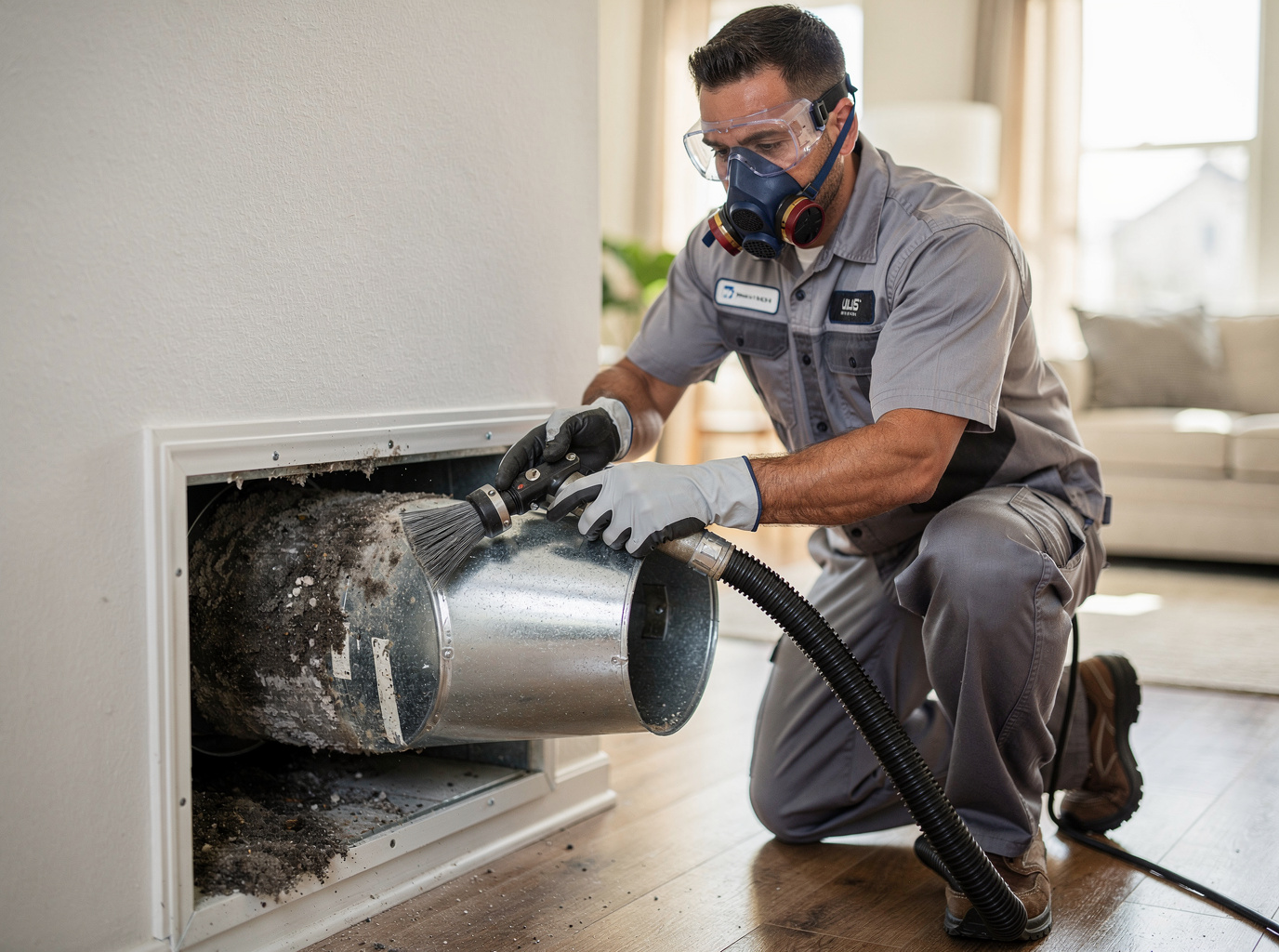
Houston's subtropical climate drives year-round humidity that condenses inside metal ducts, especially in homes built before 1980 in the Heights and Montrose. Galvanized ducts common in those neighborhoods trap moisture along seams and joints, allowing mold colonies to spread into living spaces through the HVAC system. Technicians must isolate each branch run and use negative-air machines sized for the home's square footage to prevent spores from migrating to adjacent rooms during removal.
Post-storm flooding in Harris County frequently saturates crawlspace and attic ducts in single-story ranch homes common in Midtown and Downtown. Water left in flex duct or lined rectangular trunk lines creates hidden reservoirs that standard visual inspections miss. Remediation crews pull registers, camera every accessible run, and remove saturated insulation before applying EPA-registered antimicrobials labeled for HVAC use.
River Oaks and nearby estates often feature multi-zone systems with long horizontal runs that collect dust and moisture at low points. These setups require sectional cleaning rather than whole-system fogging to avoid pushing contaminants into finished living areas. After physical removal, crews verify clearance with surface sampling before restoring airflow.
Technician insight
In Houston the thing that catches most people out with air duct mold cleaning is how quickly summer humidity re-contaminates ducts in 1960s Heights homes once the AC cycles off at night. The original square metal trunk lines sit right against roof decking that never gets enough airflow, so even after we clean, a single missed low spot starts growing again within weeks unless we also address the insulation gaps.
Montrose Bungalow Ducts After June Rains
Heavy rain pooled in the attic of a 1952 Montrose bungalow and soaked the return plenum. Camera inspection showed black growth along the bottom of the main trunk. Crews isolated the system, removed the wet liner, agitated and vacuumed the runs, then treated and re-sealed the joints before clearance testing passed.
Air Duct Mold Cleaning Services We Offer
✓Residential Air Duct Mold Removal
Removes visible and hidden mold from supply and return runs in single-family homes throughout Montrose and the Heights.
✓Attic Duct Mold Remediation
Targets mold growth in attic-installed ducts caused by Houston's summer humidity and poor ventilation in older housing stock.
✓Post-Flood HVAC Duct Cleaning
Addresses water intrusion and mold in ducts after heavy rains or flooding common in Harris County low-lying areas.
✓Commercial Air Duct Mold Treatment
Cleans mold from larger HVAC systems serving offices and retail spaces in Midtown and Downtown Houston.
✓Air Duct Inspection and Sampling
Uses cameras and surface sampling to locate mold colonies before any cleaning begins in Sugar Land or Pearland homes.
Air Duct Mold Cleaning Cost in Houston, TX
| Service | Typical Range | What Affects It |
|---|---|---|
| Full Home Duct Inspection | $200–$450 | Includes camera work and sampling in homes with 2–3 zones |
| Standard Air Duct Mold Cleaning | $900–$2,200 | Single-story homes in Montrose or Heights with moderate growth |
| Attic Duct Remediation | $1,400–$3,000 | Higher when flex runs or insulation replacement required |
| Post-Flood Duct Cleaning | $1,800–$4,500 | Varies with water volume and number of affected zones |
Ranges are typical for Houston, TX and confirmed with an exact written quote before any work starts.
How it works
- 1
Initial Assessment
Technicians inspect accessible duct runs, check for moisture, and collect samples in the home's attic or crawlspace.
- 2
Containment Setup
Negative air machines and plastic barriers isolate the HVAC system to keep spores from entering living areas.
- 3
Physical Removal
Moldy insulation and debris are extracted from ducts using HEPA vacuums and mechanical agitation tools.
- 4
Antimicrobial Application And Verification
EPA-registered treatments are applied followed by clearance sampling before the system is returned to service.
Pricing
Cost depends on number of runs, accessibility, and whether insulation must be replaced.