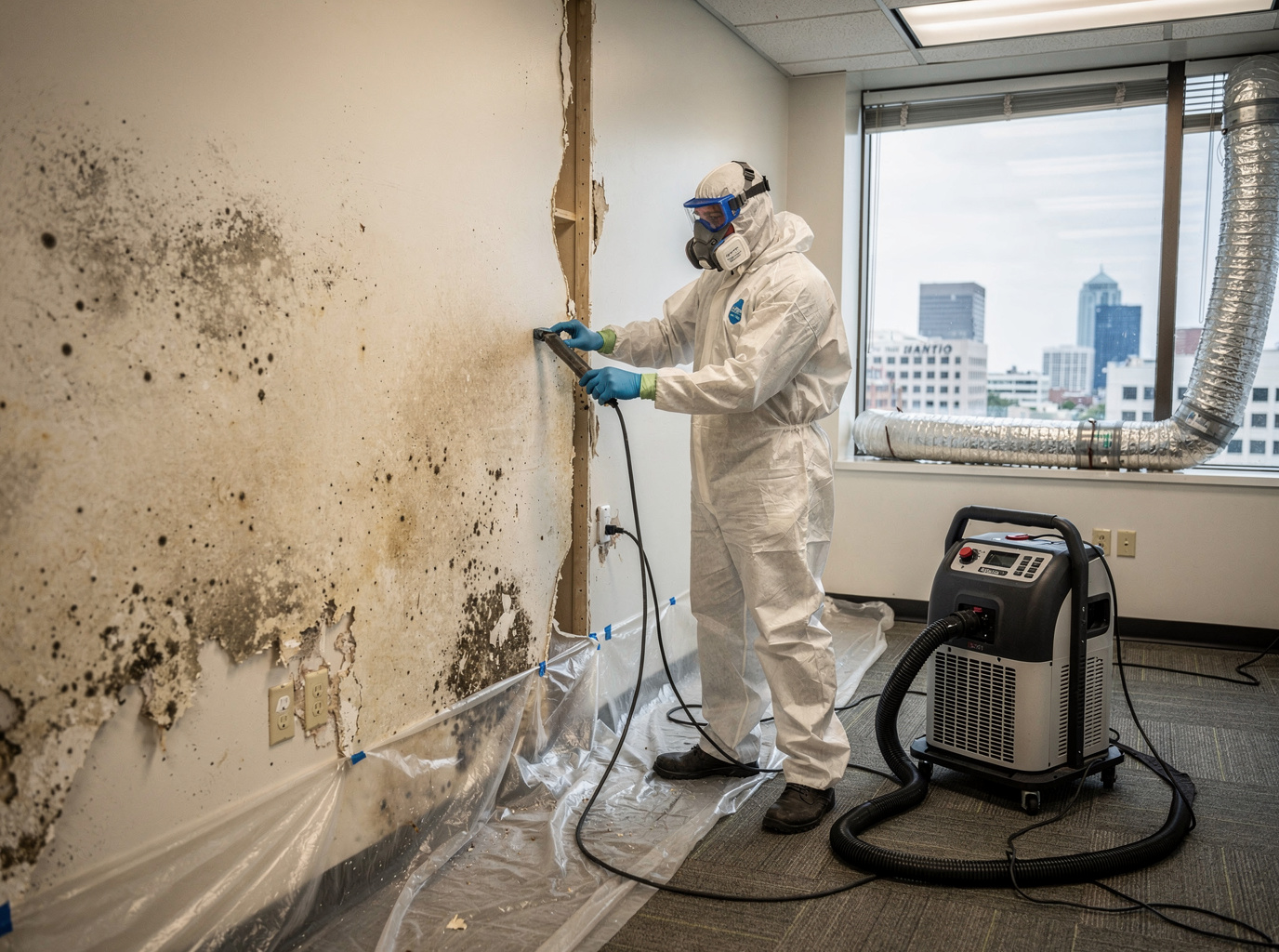
Houston’s subtropical climate drives persistent humidity that penetrates older commercial stock in the Heights, Montrose, and Midtown. Buildings constructed before modern vapor barriers often trap moisture behind brick or stucco, allowing hidden growth in wall cavities and above suspended ceilings. Commercial remediation here requires negative-air containment scaled to tenant-occupied spaces and coordination with property managers to limit business interruption.
Harris County commercial jobs frequently involve HVAC systems that recirculate spores across large square footages. Technicians map moisture with thermal imaging and pin meters, then isolate affected zones before HEPA filtration and removal of porous materials like ceiling tiles or carpet backing. Post-remediation verification follows Texas DSHS guidelines for clearance testing in occupied structures.
Nearby cities such as Katy, Sugar Land, and Pearland see similar issues in retail centers and light-industrial warehouses where roof leaks meet high summer dew points. Work in these areas often includes addressing soil moisture intrusion along slab edges and sealing penetrations that standard residential protocols overlook.
Downtown and River Oaks commercial properties add complexity with multi-tenant access restrictions and historic finishes that cannot be aggressively demolished. Remediation plans therefore emphasize targeted removal, antimicrobial application only where substrates allow, and detailed documentation for insurance and building management.
Technician insight
In Houston the thing that catches most people out with Commercial Mold Remediation is how quickly humidity from the Gulf re-contaminates a space if the HVAC is not isolated during work. Older commercial stock in the Heights and Montrose often has roof penetrations that standard residential fans cannot overcome, so we end up running larger desiccant units longer than clients expect.
Midtown Office Suite After Roof Leak
A property manager called after ceiling tiles in a two-story office near Minute Maid Park showed black discoloration following heavy spring rains. Inspection revealed mold extending into the plenum above the HVAC return. We isolated the floor, removed saturated tiles and insulation, cleaned the ductwork, and ran commercial dehumidifiers for four days until readings stabilized. Clearance samples passed and tenants returned without further disruption.
Commercial Mold Remediation Services We Offer
✓Office Building Mold Containment
Installs sealed barriers and negative-air machines to isolate mold in occupied office floors without halting tenant operations.
✓Retail Space Moisture Mapping
Uses thermal imaging and moisture meters to locate hidden growth behind displays and in stockrooms common in Houston strip centers.
✓Warehouse HVAC Mold Cleaning
Removes mold from ductwork and coils in large industrial spaces where recirculated air spreads spores across entire facilities.
✓Post-Flood Commercial Restoration
Extracts standing water and dries slab-on-grade structures after heavy rains typical in Harris County commercial districts.
✓Tenant Improvement Mold Remediation
Coordinates with contractors during build-outs in Midtown and Downtown to treat mold discovered behind new partitions.
Commercial Mold Remediation Cost in Houston, TX
| Service | Typical Range | What Affects It |
|---|---|---|
| Small retail suite assessment and containment | $1,800–$3,500 | Depends on ceiling height and HVAC isolation needs |
| Office floor mold removal | $4,200–$9,800 | Increases with multi-tenant coordination and after-hours work |
| Warehouse HVAC cleaning | $3,600–$7,500 | Affected by duct length and coil access in older buildings |
| Post-rain slab drying | $2,500–$6,200 | Varies with square footage and dehumidifier runtime required |
Ranges are typical for Houston, TX and confirmed with an exact written quote before any work starts.
How it works
- 1
Initial Assessment
Inspect affected commercial areas, document visible growth, and test humidity levels influenced by Houston’s subtropical conditions.
- 2
Containment Setup
Erect barriers and establish negative pressure to protect adjacent tenant spaces in buildings throughout Montrose and the Heights.
- 3
Source Removal
Remove saturated materials, clean non-porous surfaces, and treat remaining substrates while maintaining airflow controls.
- 4
Drying And Verification
Deploy commercial dehumidifiers, confirm moisture readings, and conduct clearance sampling before reoccupancy.
Pricing
Pricing varies by square footage, accessibility, and extent of hidden growth behind commercial finishes.